_edited.jpg)
Why Travelers Should Choose Me as Their Tour Guide

Updated: Oct 3

A good trip is more than a list of places ticked off before sunset. It is the feeling of understanding where you are, moving at the right pace, eating something memorable, and returning with stories that still feel alive years later.
That is what I aim to give every traveller I guide.Golden Triangle Tour Itinerary: Explore India’s Cultural Heart with Heritage Tour India
Anyone can point to a monument, repeat a few dates, and take you to a photo spot. A thoughtful tour guide does more. I help turn an unfamiliar place into a place that makes sense. I read the mood of the group, adjust the route when needed, explain the small details most people miss, and make sure the day feels smooth without feeling rushed.
Choosing a guide is a personal decision. You are trusting someone with your time, comfort, safety, curiosity, and sometimes your once-in-a-lifetime holiday. Here is why I work hard to be worthy of that trust.


I make the place feel real, not rehearsed
Many tours sound the same because they follow the same script. You hear the famous facts, take the expected photos, and move on. That can be useful, but it often leaves out the part that makes travel meaningful.
I focus on context. If we visit a fort, temple, old market, museum, coastal town, or mountain village, I do not stop at names and dates. I explain why the place mattered, how people used it, what changed over time, and what still survives in everyday life.
A carved doorway is not just a design. It can tell us about trade, weather, belief, wealth, or local craft. A market is not just a shopping stop. It can reveal how a city wakes up, what people eat at home, and how old traditions sit beside modern habits.Amer Fort Jeep Safari: The Thrilling Way to Explore the Pink City’s Crown Jewel
This style of guiding helps travellers remember more than facts. It helps them connect.
I also keep my explanations clear. History should not feel like a lecture. Culture should not feel like a test. I use simple language, short stories, comparisons, and small observations. If a topic needs depth, I give it depth. If the group needs a lighter moment, I keep it easy.
A tour should have rhythm. There should be time to listen, time to look, time to ask questions, and time to simply enjoy being there.
I plan carefully, then stay flexible
A smooth tour begins before the first stop. I think through routes, timing, walking distance, weather, traffic patterns, meal breaks, restroom access, and the energy level the day may require. Good planning protects the experience from common travel frustrations.
At the same time, travel rarely follows a perfect plan.
A road may be busy. A site may close a section without warning. Someone in the group may need a slower pace. The weather may change. A festival, procession, or local event may open up a better experience than the one originally planned.
That is where flexibility matters.
I do not believe in dragging travellers through a fixed route just because it was printed on an itinerary. If a better option appears, I explain it. If a stop needs more time, we discuss it. If people are tired, I adjust the pace. If someone is deeply interested in architecture, food, photography, spirituality, wildlife, or local crafts, I shape the conversation around that interest where possible.
A great tour feels well-planned, but never rigid.
This balance is especially useful for travellers visiting a place for the first time. It removes the stress of decision-making while still leaving room for discovery. You get the comfort of structure and the joy of surprise.

I care about comfort, safety, and clear communication
The best memories often come from beautiful views, moving stories, or unexpected encounters. Yet the quality of a tour is also shaped by practical details. Clear meeting points, honest timing, safe walking routes, water breaks, and simple explanations can make the difference between a tiring day and a memorable one.
I take those details seriously.Amer Fort Jaipur: Exploring the Crown Jewel of Jaipur
Before and during a tour, I keep communication direct and calm. I explain what to expect, how long a walk may take, whether a place requires modest clothing, where photography is allowed, and which local customs should be respected. If a site is crowded, I help the group move through it sensibly. If a traveller has a question or concern, I listen.
Good guiding means paying attention.
I look for signs that someone is uncomfortable, confused, hungry, overheated, or falling behind. I keep the pace human. I do not rush people through meaningful places just to cover more ground. I also do not overload the day so much that every stop becomes a blur.
Comfort does not mean removing all adventure. It means creating enough ease for travellers to enjoy the adventure fully.Jaipur Shopping Tour: Discover the Pink City’s Treasures
Here are a few things I try to handle quietly in the background:
Choosing routes that make sense for the time of day
Suggesting breaks before the group becomes exhausted
Explaining local etiquette in a respectful way
Helping avoid common tourist traps where possible
Making space for questions without making anyone feel awkward
Keeping the experience welcoming for different ages and travel styles
A good guide is visible when needed and quietly useful when not.
I help travellers go beyond the obvious sights
Famous landmarks are famous for a reason. They deserve attention. Yet some of the most rewarding travel moments happen in smaller places: a family-run eatery, a quiet lane near a busy square, an old workshop, a viewpoint reached at the right hour, or a neighbourhood where daily life tells its own story.Female Tourist Guide in Jaipur – Safe, Empowering & Memorable Tours
I like to include these layers whenever the tour allows.
That does not mean forcing travellers into hidden corners just to sound unusual. It means knowing when the main attraction needs support from the world around it. A palace makes more sense when you understand the city that served it. A religious site feels richer when you learn how people still use it today. A food stop becomes more meaningful when you know the ingredients, the season, and the story behind the dish.
The goal is not to show off secret knowledge. The goal is to make the experience fuller.
For example, after visiting a major monument, I may suggest a short walk through a nearby old quarter. After a museum, we might pause at a local snack stall to connect what we saw with what people still make and eat. After a sunrise viewpoint, we may speak about the landscape, farming, migration, or trade routes that shaped the region.
These connections help travellers see a destination as a living place rather than a collection of attractions.

I respect the people and places we visit
Travel brings guests and local communities together. That meeting should feel respectful on both sides. I believe a guide has a responsibility to protect that balance.
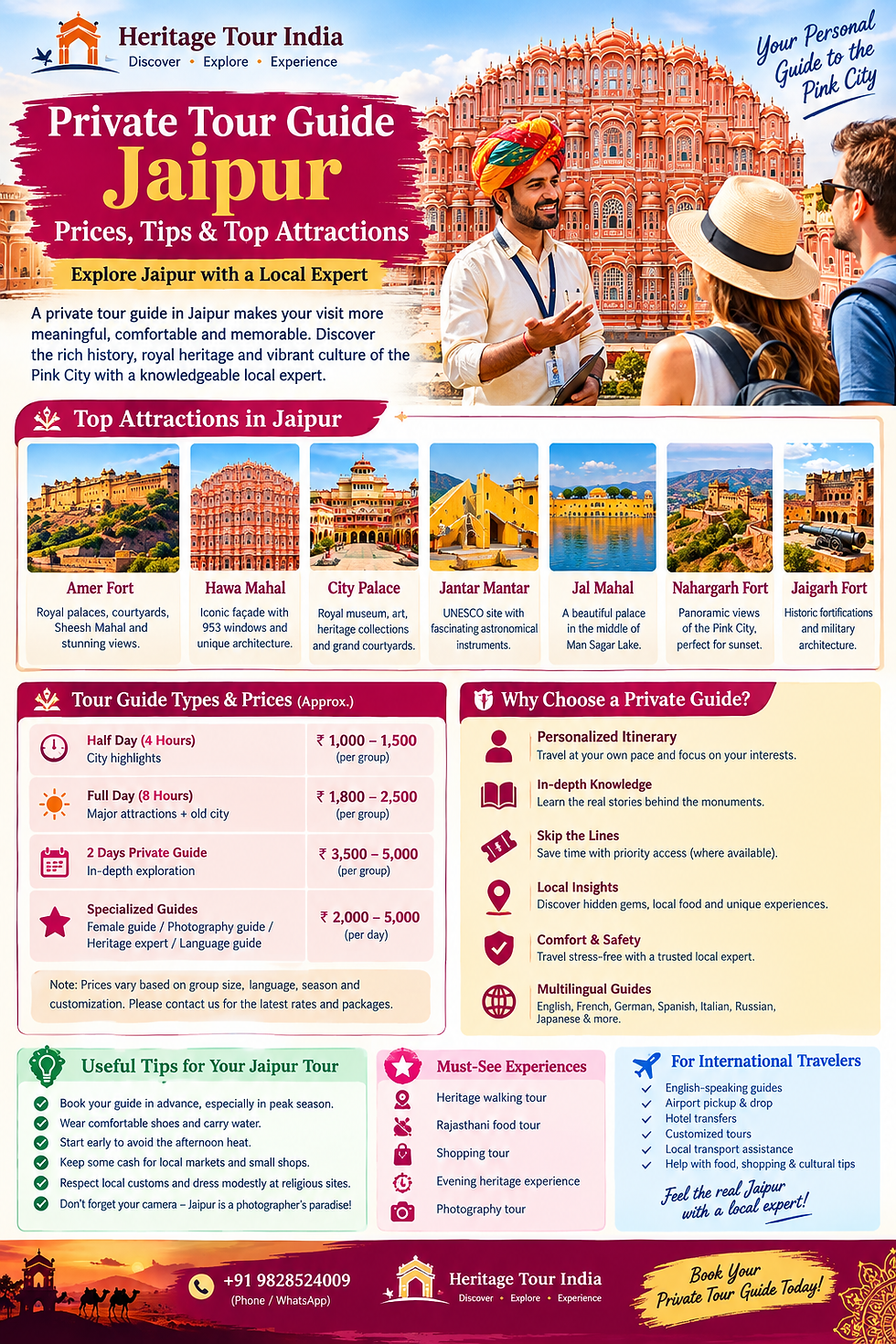
This means I encourage thoughtful behaviour at religious sites, heritage spaces, markets, natural areas, and residential neighbourhoods. I explain what is appropriate before it becomes uncomfortable. I remind travellers when shoes need to be removed, when voices should be lowered, when permission should be asked before taking a photograph, and when a place deserves quiet attention.Jaipur Sightseeing Tour: Exploring the Pink City with Heritage Tour India
Respect also shapes how I talk about local life. I avoid turning people into attractions. I do not reduce communities to stereotypes or present culture as something frozen in the past. Places change. People have different views. Traditions can be beautiful, complex, joyful, and sometimes debated. A good guide should be honest enough to show that depth without making the tour heavy.
Responsible travel also includes small choices. Supporting local sellers when it feels right. Avoiding waste where possible. Staying on marked paths in natural areas. Treating guides, drivers, vendors, and site staff with courtesy. These actions may seem simple, but they shape the travel experience for everyone.
When travellers choose me, they choose a style of touring that values curiosity with care.
I shape the tour around real interests
No two travellers are exactly alike. Some want history. Some want food. Some care about photography. Some want a gentle family-friendly pace. Some prefer long walks and layered stories. Some want time to shop for crafts. Some want to understand local faith, architecture, wildlife, or daily routines.
I listen for those interests early.
If someone asks detailed questions, I know they may enjoy more background. If someone keeps stopping for textures, colours, and doorways, I know the visual side matters. If a family has children, I keep stories shorter and more interactive. If a group loves food, I make space for flavours and local recommendations.Pink City Best Tour Guide in Jaipur – Heritage Tour India
This does not mean every tour becomes completely improvised. It means the experience feels personal within a well-managed plan.
A guide should never make travellers feel like passengers on a conveyor belt. I want people to feel seen, heard, and included. The best compliment is not only that a guest enjoyed the place, but that the day felt right for them.
That is why I ask questions, watch the pace, and leave room for small choices. Would the group like five more minutes here, or move to the next site before it gets crowded? Would they prefer a quiet café or a more local food stop? Are they more interested in the royal history, the craft traditions, or the everyday life around the monument?
Small choices create ownership. They turn a guided tour into a shared experience.

I bring patience, attention, and genuine enthusiasm
Travellers can sense when a guide is simply getting through the day. They can also sense when a guide truly enjoys sharing a place. I bring that enjoyment with me.
I like questions. I welcome curiosity. I enjoy the moment when a traveller notices something they would have walked past earlier. I enjoy helping someone understand a custom, taste a new dish with confidence, or find the right angle for a photograph without blocking others.
Patience matters too.
Some people need extra time on steps. Some want to stand quietly in a place that moves them. Some need a repeated direction. Some ask questions that may seem simple, but are honest and important to them. I never want travellers to feel hurried, embarrassed, or ignored.
A good guide creates an atmosphere where people feel comfortable being curious.
That warmth can change the whole day. It helps solo travellers feel included. It helps families relax. It helps first-time visitors ask basic questions without hesitation. It helps experienced travellers go deeper.
I know that trust is earned during the tour
A traveller chooses a guide before they know how the day will feel. That choice comes with trust. I do not take it lightly.
I earn that trust by being prepared, honest, punctual, respectful, and present. If I know an answer, I share it clearly. If I do not know something, I do not pretend. I would rather be truthful than impressive. Travellers deserve accuracy, not guesswork.
I also try to be fair in recommendations. If I suggest a shop, food stop, or local experience, it should suit the traveller, not just fill time. If something is overpriced, too crowded, or not worth the effort on that day, I say so. Honest advice saves time and builds confidence.
This is one of the strongest reasons to travel with a guide rather than only depending on maps, apps, or online lists. Digital tools can show locations and ratings. A human guide can read the situation, understand the mood, and help make better choices in the moment.
That human judgment is hard to replace.
A guided tour should leave you with more than photos
Photos are wonderful. Souvenirs can be meaningful. Yet the most valuable part of travel is often what stays in the mind: a story, a flavour, a conversation, a moment of clarity, or a new way of seeing a place.
That is the kind of experience I try to create.
When travellers choose me as their tour guide, they choose care over hurry, context over memorised facts, and flexibility over a stiff schedule. They choose someone who values comfort, safety, respect, and genuine connection.
Most of all, they choose a guide who wants the journey to feel personal. Not perfect in a polished, artificial way. Personal in the way good travel should be: thoughtful, alive, and worth remembering long after the road
Website: https://heritagetourindia.com/
Phone: +91 9828524009
Email: diwakaryogesh36@gmail.com

Comments